National contract 2022–24
Signed on 23 December 2025, with increases of around €150 a month for teachers and €110 for administrative, technical and auxiliary staff, plus arrears.[15]
Ministro dell'Istruzione e del Merito · Repubblica Italiana
Minister of Education and Merit of Italy
Jurist, professor of Roman law and former senator, leading the Italian school system — some seven million students and nearly 890,000 teaching posts — since October 2022.
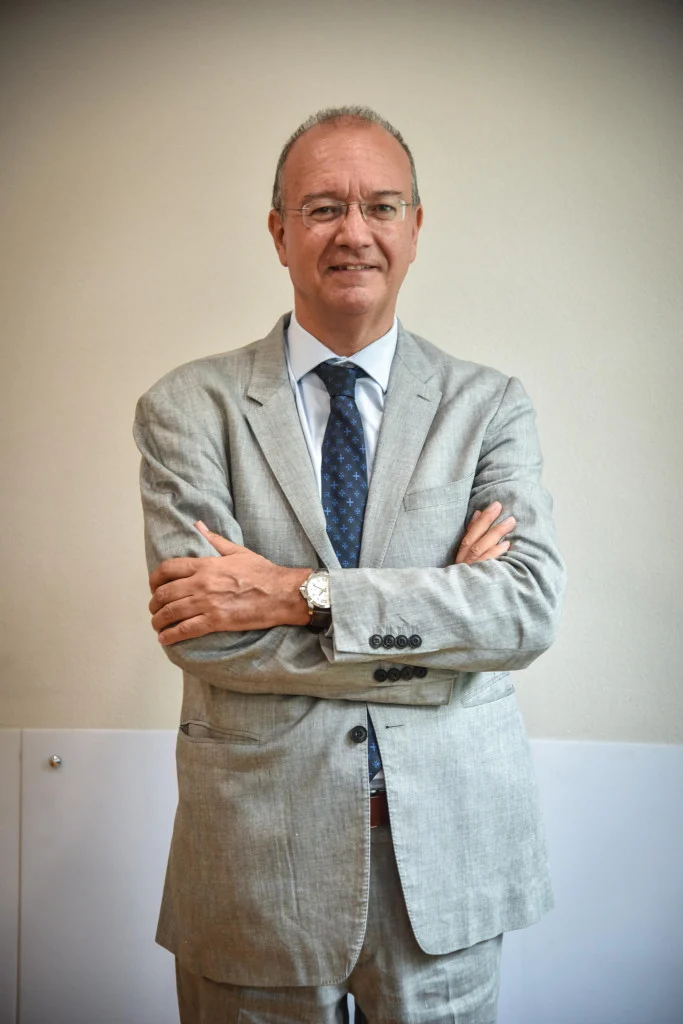
Biography
Born in Milan in 1961 and a graduate in law of the Università degli Studi di Milano, Giuseppe Valditara built an academic career in Roman law, becoming full professor of Roman private and public law at the University of Turin.
He served three legislatures in the Senate (2001–2013), where he was secretary of the education committee and rapporteur for the 2010 university reform, and later headed the higher-education department of the ministry (2018–2019). On 22 October 2022 he was sworn in as Minister of Education and Merit.[1]
The ministerial role
The Ministry of Education and Merit — so renamed by decree-law 173 of 11 November 2022 — governs the state school system from pre-school to the end of upper-secondary education, through central departments and regional school offices.[2]
7,600
school institutions, including 127 adult-education centres
MIM Focus 2024/25
40,076
school sites across the country
MIM Focus 2024/25
889,836
teaching posts, of which 205,253 for support teachers
MIM Focus 2024/25
Education & Merit — the guiding idea
«Sono profondamente convinto che ogni giovane studente sia come una lampada ad olio che aspetta solo il fuoco per accendersi.»
"I am deeply convinced that every young student is like an oil lamp that is only waiting for the flame to be lit." (translation)
The image condenses the minister's reading of "merit": not a selection of the few, but the obligation of the school to find and develop the talent of every student — the promise made by Article 34 of the Constitution to the "capable and deserving".
Policy areas
Each area has its own in-depth page, distinguishing enacted laws from measures in implementation, pilots and proposals.
Schools & students
Law 150 of 1 October 2024 restored the weight of the conduct grade and returned primary schools to descriptive judgements.[14] Smartphones are no longer used during school hours, first in primary and lower-secondary schools and, from 2025/26, in upper-secondary schools as well.
Alongside these rules sit new forms of guidance: tutor and guidance teachers, at least thirty hours a year of orientation, and a personal E-Portfolio for every upper-secondary student.
Teachers & the educational community
Signed on 23 December 2025, with increases of around €150 a month for teachers and €110 for administrative, technical and auxiliary staff, plus arrears.[15]
Law 25/2024 introduced an aggravating circumstance for violence against school staff, and the State's legal service now defends teachers assaulted while on duty.
Sixty-credit university qualifying pathways and recruitment competitions under the National Recovery and Resilience Plan, the first of them for 44,654 posts.
Vocational & technical education
Law 121 of 8 August 2024 created the technological-professional pathway: a four-year upper-secondary course in technical and vocational institutes, linked to two further years in ITS Academies and other higher technical programmes, in partnership with regions and businesses.[7] Since 2026/27 it is part of ordinary provision.
Digital & future education
Inclusion & wellbeing
"The school of merit also means the school of inclusion: no one must be excluded" (translation) — Amatrice, 21 September 2026.[12]
377k
students with disabilities in Italian schools in 2024/25 — 4.8% of all students
ISTAT, May 2026[9]
261k+
support teachers working with students with disabilities in 2024/25
ISTAT, May 2026
1.4
students with disabilities per support teacher in state schools
ISTAT, May 2026
Europe & international
In June 2024, under Italy's G7 presidency, Valditara chaired the education ministers' meeting in Trieste, which adopted a declaration built around "valorising everyone's talents".[10]
Since January 2026 he has represented Western Europe and North America on UNESCO's SDG4 High-Level Steering Committee, alongside a growing network of bilateral agreements on education and technical training.
8.2%
early leavers from education and training in 2025 — below the EU's 2030 target of 9% and the EU average of 9.1%.
Eurostat[6]
Editorial timeline
Selected milestones since October 2022. A complete, sourced record is kept in Activities & News.
Takes office as Minister of Education and Merit in the Meloni government.
Decree-law 173/2022 renames the ministry "dell'Istruzione e del Merito".
Plan against early school leaving in the South presented at Caivano.
Chairs the G7 Education Ministers' Meeting; Trieste Declaration adopted.
Law 121/2024 creates the technological-professional pathway.
Law 150/2024 on evaluation, conduct and the authority of school staff.
Law 164/2025 converts the decree reforming the final exam.
National guidelines for pre-school and the first cycle published.
Italy above the OECD average in reading and mathematics.
Latest verified activities
Each entry is dated and linked to its source.
The decree, approved by the Council of Ministers on 24 September, provides for a language-based limit on first-year classes from 2027/28 and renames technical and vocational institutes as licei tecnologici and licei professionali. It must be converted into law by Parliament.[13]
Decree-law · conversion pendingThe national "Tutti a scuola" ceremony, attended by President Sergio Mattarella, was held at Amatrice ten years after the 2016 earthquake.[11]
In the OECD's latest survey Italy scored 474 in reading and 468 in mathematics, above the OECD averages of 461 and 463, and in line with the average in science.[5]
All activities Speeches & statements Gallery
Contact
Contact person: Mr. Digant Sharma — +91-9769999960 · im@digantsharma.com