Overview

The Minister

Policy Areas

International & Media

Contact

11 — Inclusion & Wellbeing

A school where no one is left out

Students with disabilities and the teachers who support them, respect as a civic discipline, the safety of school staff and the integration of children from other countries — inclusion as the other face of merit.

Giuseppe Valditara seated, wearing a grey jacket, with an attentive, listening expression
Listening — an image for a policy area built on attention to individual needs
Students with disabilities ~377,000Support teachers >261,000Non-Italian citizenship 11.2% of studentsGiornata del rispetto 20 January

Disability in figures · 2024/25

Three numbers that frame the policy

ISTAT survey on the school inclusion of students with disabilities, published 27 May 2026.[1]

377k

students with disabilities — about 4.8% of all students, up from 2.6% ten years earlier.

ISTAT 2024/25

261k+

support teachers; in state schools, 1.4 students with disabilities per support teacher. 78% of support teachers are specialised.

ISTAT 2024/25

59.7%

of students with disabilities changed support teacher — the discontinuity that recent legislation targets.

ISTAT 2024/25

Continuity is the issue

The striking figure in the ISTAT data is not the number of support teachers but the rate at which they change.

For a child with a disability, the support teacher (insegnante di sostegno) is often the adult who knows best how that child learns, communicates and copes with the day. When nearly six in ten such students change support teacher, the knowledge built up over a year is lost and has to be rebuilt.[1] One structural factor is qualification: a large number of support posts are covered by teachers without the specialist title — Valditara has cited a figure of more than 85,000 unspecialised support teachers.[2]

Decree-law 31 May 2024, n. 71, converted by Law 106 of 29 July 2024, addressed both sides of the problem.[2] On specialisation, Article 6 opened courses run by INDIRE — of at least 30 university credits — to teachers who had served at least three years on support in the previous five, available until 31 December 2025. Article 7 created a route for teachers with qualifications obtained abroad. On continuity, Article 8 allows families to ask that the same supply support teacher stay with their child the following year, with the head teacher's agreement.

The decree-law of 30 September 2026, n. 170 adds a procedural element: according to specialist press, it sets a provisional individual education plan (PEI) by June and the final plan by 15 October, so that support can be organised before the school year is under way.[9] As a decree-law, it remains subject to parliamentary conversion.

The trade-offs are real. Faster specialisation routes increase the supply of qualified teachers, but questions about the depth of training and about fairness between different recruitment channels are part of the professional debate; these issues are covered from the staff perspective under Teachers & School Staff. For overall staffing, the ministry's 2024/25 data count 205,253 support posts out of 889,836 teaching posts.[17]
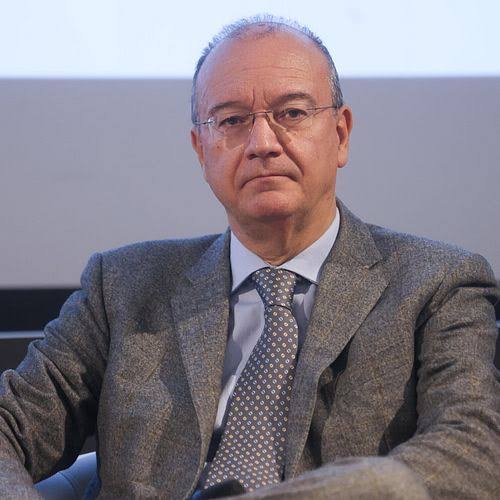
The minister on continuity of support

«Per un ragazzo con disabilità cambiare ogni anno è un dramma che non dobbiamo più accettare»

Giuseppe Valditara · "Tutti a scuola", Convitto Nazionale, Cagliari, 16 September 2024 · Tecnica della Scuola[3]

"For a young person with a disability, changing every year is a drama we must no longer accept." (translation)

The ledger

Inclusion and wellbeing measures

Each measure is classified by legal status. Decree-laws are in force from publication but lapse if not converted by Parliament within sixty days.

Continuity and specialisation of support teachers

DL 31 May 2024, n. 71 · conv. L. 106/2024

INDIRE specialisation courses (at least 30 CFU) for teachers with three years of support service in the last five, available until 31 December 2025; a route for qualifications obtained abroad; and the right of families to request that the same supply support teacher continue the following year, with the head teacher's agreement.[2]

Enacted law

New PEI deadlines

DL 30 Sep 2026, n. 170

Specialist press reports that the decree sets new deadlines for the individual education plan: a provisional PEI by June and the final plan by 15 October.[9]

Decree-law · conversion pending

Law on bullying and cyberbullying

L. 17 May 2024, n. 70

Extends the 2017 cyberbullying law to bullying; an internal anti-bullying code in every school; defined procedures for head teachers; a strengthened 114 Emergenza Infanzia helpline; re-educational paths for minors; the Giornata del rispetto on 20 January.[4]

Enacted law

Implementing decree on bullying

D.lgs. 12 Jun 2025, n. 99

The legislative decree giving effect to the 2024 law.[4]

Legislative decree

"Educare alle relazioni"

Presented 22 Nov 2023

Voluntary 30-hour extracurricular modules for upper secondary students on relationships, respect and gender violence, with teachers as moderators and €15 million of EU funds. Specialist and national press reported limited implementation by 2024–25.[5]

Announced · partial

Protection of school staff

L. 4 Mar 2024, n. 25

Aggravating circumstance for violence against school staff; heavier penalties where parents or guardians are responsible; a national observatory on staff safety; a national day on 15 December.[6]

Enacted law

State legal defence for assaulted staff

MIM note n. 15184, early 2023

Teachers and ATA staff who are assaulted may be defended by the Avvocatura dello Stato in civil and criminal proceedings.[7]

Operational

Language-based 30% cap in first-year classes

DL 30 Sep 2026, n. 170

From 2027/28, pupils who do not speak Italian may make up no more than 30% of first-year classes, with exemptions and redistribution or an additional Italian-language teacher. See below.[9]

Decree-law · conversion pending

Cyberbullying and the digital side of student wellbeing are covered on Digital & Future Education; the conduct reform on Students & Youth.

Integration

Students of non-Italian citizenship

914,860

students without Italian citizenship, 2022/23.

11.2%

of the school population.

65.4%

of them were born in Italy.

MIM data, 2022/23[8]

Nearly one Italian student in nine does not hold Italian citizenship, and about two-thirds of these students were born in Italy.[8] Citizenship, in other words, is a weak guide to a child's language or educational needs: many students recorded as "foreign" speak Italian as their everyday language, while recently arrived children may have none.

Decree-law 30 September 2026, n. 170 takes language rather than citizenship as its criterion. From 2027/28, pupils who do not speak Italian may account for no more than 30% of first-year classes in primary, lower and upper secondary schools. Exemptions cover children born in Italy, those with two years of Italian pre-school (for primary) and those with three successful years in Italian schools (for secondary). Where the threshold is exceeded, pupils are redistributed to nearby schools or an additional Italian-language teacher is assigned. The same decree bans face coverings at school.[9][10]

A 30% limit is not new as a concept: a 2010 ministerial circular issued under minister Gelmini already set a similar threshold.[10] The 2026 measure has nonetheless drawn debate. Supporters present it as a way to make sure that every class can teach effectively in Italian; critics question its practical effects on families, on schools and on the integration it seeks to promote. The text is in force as a decree-law and may be amended during conversion, expected by the end of November 2026.

The minister's own framing, at the opening of the 2026/27 school year, linked merit and inclusion explicitly — and placed the Italian language at the centre of integration.[11]

«La scuola del merito significa anche scuola dell'inclusione, nessuno deve essere escluso.»

Amatrice, 21 September 2026[11] — "The school of merit also means the school of inclusion; no one must be excluded." (translation)

Decree-law · conversion pending

The respect calendar

Dates that mark the year

Two annual days — 15 December for school staff, 20 January for respect — sit alongside the laws that created them. Scroll or use the arrows.

«Quest'anno scolastico dovrà essere l'anno dedicato al rispetto, degli altri e di sè.»

Amatrice, 21 September 2026[11]

22 Nov 2023

"Educare alle relazioni"

Presented in the Senate's Sala Koch by ministers Valditara, Roccella and Sangiuliano.[5]

15 Mar 2024

Law 25/2024 published

Protection of school staff; in force from 30 March 2024.[6]

Every 15 Dec

National day on school staff safety

Instituted by Law 25/2024 to focus attention on the safety and dignity of those who work in schools.[6]

17 May 2024

Law 70/2024

Bullying and cyberbullying; published 30 May, in force 14 June 2024.[4]

Every 20 Jan

Giornata del rispetto

A day of respect in every school, instituted by Law 70/2024.[4]

31 May 2024

DL 71/2024

Support-teacher specialisation and continuity; converted by Law 106 of 29 July 2024.[2]

12 Jun 2025

D.lgs. 99/2025

Implementing decree of the bullying law.[4]

21 Sep 2026

"The year of respect"

At Amatrice the minister asks that 2026/27 be dedicated to respect for others and for oneself.[11]

Beyond the classroom

Territory, adults, families

Inclusion is also a question of where a child lives, of adults returning to learn, and of the agreement between school and home.

Territorial inclusion

Agenda Sud & Agenda Nord

Agenda Sud (DM 176/2023, about €265.5 million) reached more than 2,000 schools in eight southern regions, with extra support for 245 low-performing schools identified through INVALSI data.[12] Agenda Nord (DM 102/2024, €220 million) followed for ten Centre-North regions.[13] In September 2025 a further ~€500 million brought the total above €1 billion, and the number of "fragile" southern schools supported rose from 245 to 600.[14]

In implementation

Adult education

CPIA and the Italian language

The 127 provincial centres for adult education (CPIA) are counted among Italy's 7,600 school institutions.[17] DM 19/2024 reserved €40 million of PNRR dropout funds for them, and on 30 September 2026 the ministry announced further investment in the centres, describing language as key to integration.[16]

Ministerial measure

Family and school

The patto di corresponsabilità

Schools agree an educational co-responsibility pact with families. The ministry has used it as the vehicle for shared rules: circular 3392/2025 asked schools to update the pact alongside their regulations when extending the smartphone ban, with exceptions for students whose PEI or PDP requires a device.[15] It is the place where inclusion, conduct and wellbeing become a written agreement between adults.

In implementation

Editorial note

Territorial gaps in results and their social roots are examined in the essay on Education & Society; the reform programmes are described under School Reform.

Sources & references (17)
  1. ISTAT — L'inclusione scolastica degli alunni con disabilità, anno scolastico 2024/2025 (27 May 2026)
  2. Orizzonte Scuola — DL 71/2024 in the Gazzetta Ufficiale: shortened support specialisation, teachers for foreign students (text)
  3. Tecnica della Scuola — Opening of the school year, Cagliari, 16 September 2024
  4. Orizzonte Scuola — Bullying and cyberbullying: internal code in every school and the Giornata del rispetto (L. 70/2024)
  5. Tecnica della Scuola — "Educare alle relazioni": €15 million to pay teachers
  6. Normattiva — Legge 4 marzo 2024, n. 25 (protection of school staff)
  7. Orizzonte Scuola — Assaulted teachers and ATA staff: State legal defence, ministry operational note
  8. MIM data via Immigrazione.it — Students with non-Italian citizenship, school year 2022/23
  9. Gazzetta Ufficiale — Decreto-legge 30 settembre 2026, n. 170
  10. Pagella Politica — "Nuovo decreto scuola"
  11. Tecnica della Scuola — "Tutti a scuola", Amatrice, 21 September 2026: integration of foreign students and the Italian language
  12. LaPresse — Agenda Sud: €265 million for schools, 1 September 2023
  13. Sky TG24 — Agenda Nord: €220 million investment in schools, Milan, 27 May 2024
  14. Orizzonte Scuola — Early school leaving: €500 million more to reduce North–South gaps
  15. MIM — Circolare n. 3392 del 16 giugno 2025
  16. MIM — homepage news item, 30 September 2026: investment in CPIA adult-education centres
  17. MIM — Principali dati della scuola, Focus avvio anno scolastico 2024/2025