Overview

The Minister

Policy Areas

International & Media

Contact

06 — School Reform

School reform, file by file

Laws, decrees, guidelines and circulars that have changed — or are set to change — the Italian school since 2022, each classified by its real legal status.

Open the ledger

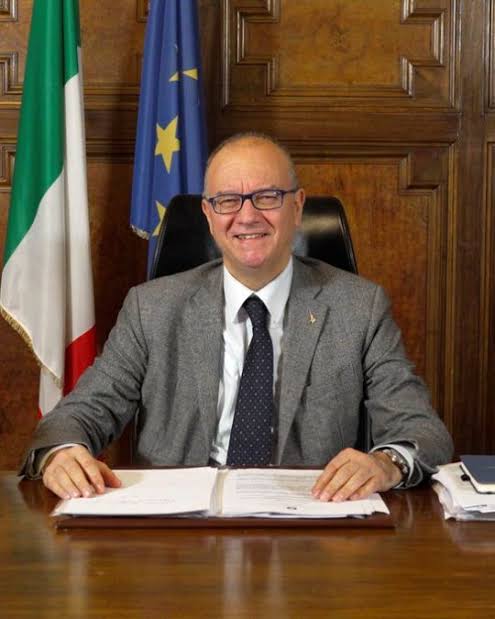
Giuseppe Valditara in a grey suit, smiling at his desk with open documents in front of him and flags behind
At work on the documents, at the ministerial desk
Files 18Enacted laws 5Pending DL 170/2026Period 2022–2026

How to read this page

Five kinds of status

Italian school policy moves through very different instruments: parliamentary laws, decree-laws that must be converted within sixty days, ministerial decrees and regulations, notes and circulars, and funding decrees. A measure can be "approved" and still years away from any classroom. Each entry below carries one of five labels.

Enacted law
Approved by Parliament (or a decree-law already converted) and in force.
In implementation
Ministerial decrees, guidelines, circulars or funding in force and being applied in schools.
Pilot / experimental
Experimental measures in a limited number of schools, subject to evaluation.
Proposal / announced
Drafts, announcements, and decree-laws in force but awaiting parliamentary conversion.
Historical
Measures adopted before October 2022 that the current ministry inherited.

The reform ledger

Every file, with its status

Filter by status. Entries are grouped by theme and sourced to the official text or to specialist press where noted.

18 entries shown

Evaluation

Conduct and evaluation

L. 1 Oct 2024, n. 150 · in force 31 Oct 2024

Conduct is assessed over the whole year and acts of violence weigh heavily. Lower secondary school returns to a conduct mark in tenths; in both secondary cycles a conduct mark below six means non-admission to the next year or to the final exam. In upper secondary, a six in conduct triggers an elaborato di cittadinanza — a citizenship assignment — before the September assessment. Primary school returns to synthetic judgements, from ottimo to gravemente insufficiente.[1]

Implementing regulations amending the school statutes received final Council of Ministers approval around late July 2025 and apply from 2025/26; suspensions are converted into school-based citizenship activities.[2] Article 3 adds a payment of €500–10,000 to the victim's school on conviction for crimes against school staff.[1]

Enacted law

Curriculum

New Indicazioni nazionali — pre-primary and first cycle

DM n. 221/2025 · GU n. 21, 27 Jan 2026

The national curricular guidelines for pre-primary, primary and lower secondary school, drafted by a commission set up in March 2024 and published in draft in March 2025, replace the 2012 guidelines. The emphasis falls on Italian and Western history, grammar, memorisation and handwriting.[4]

Application: all pre-primary sections from 2026/27; primary and lower secondary phased in from first classes in 2026/27. Optional Latin ("LEL") in the second year of lower secondary, one extra hour a week, set by DL 170/2026 to start in 2027/28.[4][11]

Adopted · phased from 2026/27

Curriculum

Indicazioni nazionali for the licei

Draft · CSPI opinion 14 Jul 2026

A draft by a commission chaired by Loredana Perla received the opinion of the National Council for Education (CSPI) on 14 July 2026, by 22 votes to 12. Application is expected from 2027/28. In June 2026 the ministry said the new liceo programmes emphasise the "centrality of the West".[5]

The text has not been adopted: it should be read as a proposal until a final regulation is published.

Proposal · not adopted

Curriculum

Civic education guidelines

DM 7 Sep 2024, n. 183 · from 2024/25

New guidelines replace those of 2020 (DM 35/2020) and organise civic education into three strands — the Constitution; economic development and sustainability; digital citizenship — with 12 competences and at least 33 cross-curricular hours a year.[6]

The CSPI gave an unfavourable opinion on the draft; the guidelines were adopted nonetheless.[6]

Ministerial measure · in force

Examinations

Maturità reform

DL 9 Sep 2025, n. 127 · L. 30 Oct 2025, n. 164

The final upper-secondary examination returns to the name esame di maturità and acquires an orientation value. Refusing the oral (scena muta) means failing. The oral covers four subjects announced each January; commissions have five members (two internal, two external and an external president); bonus points are available from 90 rather than 97. PCTO work-based learning is renamed formazione scuola-lavoro, and the "4+2" model becomes permanent.[7][8]

First applied to the Maturità 2026 (OM n. 54 of 26 March 2026).[7]

Enacted law

Guidance

Orientation guidelines, tutor and guidance teachers

DM 22 Dec 2022, n. 328 · DM 63/2023

A PNRR-linked reform introducing at least 30 hours a year of orientation modules, a personal E-Portfolio in which students choose a "capolavoro" (their best piece of work), and two new teacher roles: the docente tutor and the docente orientatore.[9]

DM 63 of 5 April 2023 funded the roles with €150 million for 2023 and 20 hours of training; ministerial guidance set 30–50 students per tutor. In implementation since 2023/24.[9]

In implementation

Technical & vocational

Reform of technical institutes

DM 19 Feb 2026, n. 29 · MIM note n. 1397/2026

Based on articles 26 and 26-bis of DL 144/2022 (PNRR Mission 4, reform 1.1), new curricula and timetables apply from first classes in 2026/27 and are phased in over five years.[10]

Unions and the regional council of Piedmont asked for a postponement.[10] See Vocational & Technical.

In implementation

Technical & vocational

Technical-professional pathway "4+2"

L. 8 Aug 2024, n. 121

Four-year experimental courses in technical and vocational institutes linked to two years at an ITS Academy or in regional training. From 180 schools in 2024/25 to 396 in 2025/26; made ordinary from 2026/27 by DL 127/2025.[18][7]

Enacted law

Technical & vocational

"Licei tecnologici" and "licei professionali"

DL 30 Sep 2026, n. 170, art. 9

Technical institutes are renamed licei tecnologici and vocational institutes licei professionali. The decree-law is in force from 1 October 2026 but must be converted by Parliament; conversion is expected by the end of November 2026.[11]

Decree-law · conversion pending

Class composition

30% cap on non-Italian-speaking pupils

DL 30 Sep 2026, n. 170

From 2027/28, pupils who do not speak Italian may make up at most 30% of first-year classes in primary, lower and upper secondary school. The criterion is language, not citizenship; pupils born in Italy, or with two years of Italian pre-school (for primary) or three successful years in Italian schools (for secondary) are exempt. Schools can redistribute pupils to nearby schools or add an Italian-language teacher. The same decree bans face coverings at school.[11][12]

A 30% limit was already present as a concept in a 2010 ministerial circular.[12]

Decree-law · conversion pending

School life

Smartphones in school

Circ. Dec 2022 · Note 5274/2024 · Circ. 3392/2025

A December 2022 circular kept phones out of lessons except for teaching use. Note 5274 of 11 July 2024 banned them during school hours, including for teaching, in primary and lower secondary from 2024/25. Circular 3392 of 16 June 2025 extended the ban to upper secondary — state and paritarie — from 2025/26, with exceptions under individual plans (PEI/PDP); schools update their rules and the patto di corresponsabilità.[13]

Ministerial measure · in force

Network

Dimensionamento — reorganisation of the school network

L. 29 Dec 2022, n. 197, art. 1 c. 557

Regional quotas of head teachers and administrative directors are set on a ratio of 900–1,000 pupils per institution: 961 for 2024/25, 949 for 2025/26 and 938 for 2026/27 (DM 124 of 30 June 2025). The measure is linked to the PNRR.[14]

Several regions dispute it; on 12 January 2026 the Council of Ministers appointed commissioners for Emilia-Romagna, Tuscany, Umbria and Sardinia.[14]

Enacted · contested

Curriculum

Liceo del Made in Italy

L. 27 Dec 2023, n. 206, art. 18

A new liceo track in economics, law and the management of Made in Italy, with first classes in 2024/25 in schools offering the economic-social option of the liceo delle scienze umane.[19]

Enacted law

Investment

Agenda Sud and Agenda Nord

DM 176/2023 · DM 102/2024

Targeted funding for basic skills and longer school time; total above €1 billion after the September 2025 top-up. Analysed on the Education & Merit page.[22]

In implementation

Investment

STEM, languages and staff training (PNRR)

DM 12 Apr 2023, nn. 65 and 66

DM 65: €750 million — €600 million for students' STEM, digital and language skills and €150 million for teachers' language courses, with 40% reserved for the South. DM 66: €450 million for staff training in the digital transition.[16]

In implementation

Investment

PNRR against early school leaving

DM 2 Feb 2024, n. 19

€790 million under PNRR investment line 1.4: €750 million for state secondary schools and €40 million for adult-education centres (CPIA).[23] The ministry reports that all PNRR education targets were met by 31 August 2026.[17]

In implementation

Digital

Artificial intelligence trial

Announced 8 Sep 2024 · Cernobbio

A two-year trial in 15 classes in Lombardy, Lazio, Tuscany and Calabria, using an AI assistant for STEM subjects and foreign languages, evaluated by INVALSI. National AI guidelines followed in August 2025 — see Digital & Future Education.[20]

Pilot / experimental

Investment

Piano Scuola 4.0

DM 14 Jun 2022, n. 161 · DM 218/2022

Adopted before Valditara took office: €2.1 billion, including €1.296 billion for "Next Generation Classrooms" and €424.8 million for "Next Generation Labs". Its implementation continued under the current ministry, but its design belongs to the previous government.[15]

Historical · predecessor

Chronology

Reform milestones, 2022–2026

Seventeen dates in four years. Scroll or use the arrows to move through the timeline.

22 Oct 2022

Minister sworn in

Giuseppe Valditara takes office in the Meloni government.

11 Nov 2022

A new name

DL 173/2022 renames the ministry "Istruzione e Merito".[21]

22 Dec 2022

Orientation

DM 328 introduces orientation modules, tutor and guidance teachers.[9]

12 Apr 2023

PNRR skills

DM 65 and 66 allocate €1.2 billion to STEM, languages and staff training.[16]

1 Sep 2023

Agenda Sud

Presented in Caivano.[22]

27 Dec 2023

Made in Italy

L. 206/2023 creates the Liceo del Made in Italy.[19]

11 Jul 2024

Phones out

Note 5274: smartphone ban in primary and lower secondary.[13]

8 Aug 2024

"4+2"

L. 121/2024 on the technical-professional pathway.[18]

7 Sep 2024

Civic education

DM 183 adopts new guidelines.[6]

1 Oct 2024

Conduct

L. 150/2024 reforms conduct and evaluation.[1]

16 Jun 2025

Upper secondary

Circular 3392 extends the phone ban from 2025/26.[13]

9 Sep 2025

Maturità

DL 127/2025, converted by L. 164 of 30 October 2025.[7]

12 Jan 2026

Commissioners

Council of Ministers appoints commissioners for dimensionamento in four regions.[14]

27 Jan 2026

New curricula

Indicazioni nazionali for the first cycle published in the Gazzetta Ufficiale.[4]

19 Feb 2026

Technical institutes

DM 29/2026: new curricula from 2026/27.[10]

14 Jul 2026

Licei draft

CSPI opinion on the draft guidelines for the licei.[5]

30 Sep 2026

DL 170/2026

Decree-law on the 2026/27 school year; conversion pending.[11]

Analysis

What changes for a student, a teacher, a family

Reforms are written as articles and decrees; they are lived as timetables, marks and conversations at home. Read from three points of view, the same measures look different.

The student

Clearer rules, higher stakes

  • Conduct counts across the whole year; below six means repeating the year.[1]
  • No smartphone during school hours, at every level from 2025/26.[13]
  • At least 30 hours a year of orientation, a personal E-Portfolio and a tutor teacher.[9]
  • A maturità oral on four subjects known from January — and no option of staying silent.[7]
  • In technical institutes, new curricula for those starting in 2026/27.[10]

The teacher

New roles, new texts

  • New curricular guidelines in the first cycle, phased class by class from 2026/27.[4]
  • Civic education as a cross-curricular duty of at least 33 hours a year, across three strands.[6]
  • The option to become a tutor or guidance teacher, with dedicated training.[9]
  • Maturità commissions of five members: two internal, two external and an external president.[7]
  • For more on contracts and recruitment, see Teachers & School Staff.

The family

More legible signals

  • Primary report cards return to synthetic judgements such as buono or ottimo.[1]
  • An updated patto di corresponsabilità with the school on phones and conduct.[13]
  • New names for upper-secondary tracks — licei tecnologici and professionali — if DL 170/2026 is converted.[11]
  • From 2027/28, rules on the composition of first-year classes.[11]
  • In some regions, school mergers under dimensionamento.[14]

Friction

Implementation challenges

Where reforms have met resistance or remain incomplete.

Advisory bodies

The National Council for Education (CSPI), the consultative body that gives opinions on ministerial texts, gave an unfavourable opinion on the draft civic-education guidelines in 2024, which were nevertheless adopted.[6] On the draft guidelines for the licei its opinion in July 2026 was favourable but divided, by 22 votes to 12.[5]

Timing

For the reform of technical institutes, unions and the regional council of Piedmont asked for the start to be postponed; the ministry kept 2026/27 as the first year.[10] Phased introduction — class by class over five years for technical institutes and in successive cohorts for the first cycle — means the full effect of these reforms will not be visible before the end of the decade.

State and regions

The reorganisation of the school network has been the most open institutional conflict. Several regions dispute the quotas set under the 2023 Budget Law, and in January 2026 the government appointed commissioners to adopt the plans in four of them.[14]

Parliament

Decree-Law 170/2026, approved by the Council of Ministers on 24 September 2026, is in force but awaits conversion, expected by the end of November 2026. Parliament may amend it; until then the renaming of technical and vocational institutes and the 30% cap remain provisional.[24][11]

Investment

A large share of recent investment comes from the PNRR, whose education targets the ministry reports as met by 31 August 2026.[17] The open question, common to all recovery-plan spending, is how programmes funded on a temporary basis will be sustained once that funding ends.

Sources

Where a status depends on specialist press rather than an official text, the source is indicated in the entry. For the ideas behind these measures see Education & Merit; for the institutional framework see Ministerial Role.

Sources & references (24)
  1. Normattiva — Legge 1 ottobre 2024, n. 150
  2. ItaliaOggi — Conduct grade: final Council of Ministers approval of the implementing regulations
  3. MIM — Conduct reform becomes law: synthetic judgements return to primary school
  4. MIM (USR Campania) — D.M. n. 221/2025, Regolamento recante Indicazioni nazionali per il curricolo della scuola dell'infanzia e del primo ciclo
  5. Tecnica della Scuola — Indicazioni nazionali for licei: draft approved by the CSPI, start in 2027
  6. MIM (USR Sardegna) — Le nuove Linee guida per l'insegnamento dell'educazione civica, D.M. n. 183 del 7 settembre 2024
  7. Gazzetta Ufficiale — Legge 30 ottobre 2025, n. 164, conversion of D.L. 127/2025
  8. MIM — Maturità: the reform is law
  9. Orizzonte Scuola — Docente tutor e orientatore: official FAQ
  10. Orizzonte Scuola — Technical institutes reform from 2026/27
  11. Gazzetta Ufficiale — Decreto-legge 30 settembre 2026, n. 170
  12. Pagella Politica — The new school decree (DL 170/2026)
  13. MIM — Circolare n. 3392 del 16 giugno 2025
  14. Orizzonte Scuola — Dimensionamento scolastico: commissioners for four regions
  15. Orizzonte Scuola — Piano Scuola 4.0: measures funded and implementation
  16. Orizzonte Scuola — STEM and staff training: €1.2 billion (DM 65 and 66/2023)
  17. Orizzonte Scuola — Valditara: all PNRR targets exceeded
  18. Normattiva — Legge 8 agosto 2024, n. 121 (filiera tecnologico-professionale)
  19. Orizzonte Scuola — Liceo del Made in Italy: enrolments open
  20. LaPresse — AI trial in 15 classes, 8 September 2024
  21. Camera dei deputati — D.L. 173/2022, riordino delle attribuzioni dei Ministeri
  22. LaPresse — Agenda Sud: €265 million for schools, 1 September 2023
  23. D.M. 2 febbraio 2024, n. 19 — PNRR investment 1.4 against early school leaving
  24. Governo Italiano — Comunicato stampa del Consiglio dei Ministri n. 190, 24 September 2026